
 Roger Land
 A diamond can look impressive in a jewelry display yet feel entirely different once it is set on a finger. A high setting may catch on clothing, a delicate band may need extra care, and a beautifully proportioned stone can appear larger than a heavier diamond with a less flattering cut.
These details deserve attention before buying an engagement ring. For couples in Germany, the decision often involves comparing diamond origins, selecting a practical metal, understanding European ring sizes, and deciding whether a customized design is worth the additional planning. The most satisfying purchase usually comes from understanding how the stone, setting, and band work together.
Start With the Ring’s Proportions, Not Its Carat Weight
Carat weight is the measure of the diamond’s mass, not its physical size. Diamonds with a one-carat weight will have a noticeable difference in appearance due to their shape, proportion and physical measurements.
The round brilliant diamond is known for its perfect combination of shine. An oval diamond will elongate the finger while an emerald cut will show clarity and geometry.
An interesting comparison would be to compare the physical millimeter measurements of the diamond and not rely solely on carat weight.
For instance, an oval-shaped diamond that has too much depth will hold more weight below the surface of the stone. The other diamond with the same carat weight but better proportions will appear bigger when viewed from the top.
This does not mean to buy the shallowest diamond possible. Bad proportions may lead to a lack of shine and presence of undesirable dark spots on the stone. Buyers should ask for pictures and videos of the diamond under different lighting conditions.
Natural and Lab-Grown Diamonds: Understanding the Difference
Both natural and lab-created diamonds consist of the same chemical elements and crystals. Both types of diamonds can give high brilliance, hardness, and optical qualities. The only thing that distinguishes them is the process of their formation.
The formation of natural diamonds takes place geologically, while that of lab-created diamonds happens under controlled processes like HPHT or CVD.
Lab-created diamonds can provide you with a bigger diamond within your budget, though the price and re-sale value will be different from natural diamonds’ one.
For buyers comparing a lab-grown engagement ring with a natural diamond alternative, the useful questions concern grading, appearance, setting quality, and the total purchase price rather than origin alone.
Neither origin guarantees superior cutting or craftsmanship.
Diamond grading reports from recognized laboratories can help establish the identity and characteristics of a stone. Buyers should confirm whether the report explicitly identifies the diamond as laboratory-grown or natural.
Why Diamond Cut Deserves More Attention Than Clarity
The most frequent question posed during purchasing concerns the selection between a big diamond with average clarity and a small diamond with excellent clarity grading. It will depend on what is observable.
Grading of a diamond’s clarity is based on internal and external factors observable under standard conditions. In some cases, inclusions in a diamond cannot be seen without magnification, particularly if they are not centrally located.
In some cases, an eye clean diamond with average clarity grading can bring more pleasure to a customer than a better-graded diamond with bad proportions.
Cut quality determines how effectively a lab diamond Malaysia handles incoming light. In round brilliant diamonds, recognized cut grades provide a useful starting point. It is necessary to visually assess fancy shape diamonds since their features cannot be fully covered by the grading scale.
For example, an emerald cut diamond has large facets which are likely to display inclusions in comparison with brilliant cut diamonds. Therefore, it would be better to purchase not according to a grading scale but by comparing diamonds visually.
The Setting Changes How the Ring Feels Every Day
The style of the ring determines the appearance, safety, maintainability, and compatibility with other jewelry. The four prongs of a solitaire ring make the center diamond visible and give an open look. But the arrangement and maintaining of the prongs are important, especially in the case of bigger diamonds.
The six prongs give more points of contact to hold the diamond; however, they might make the diamond look busy, especially in smaller diamonds.
The bezel setting includes metal around the entire border of the diamond. They can hide the borders of the diamond and make it attractive for practical use.
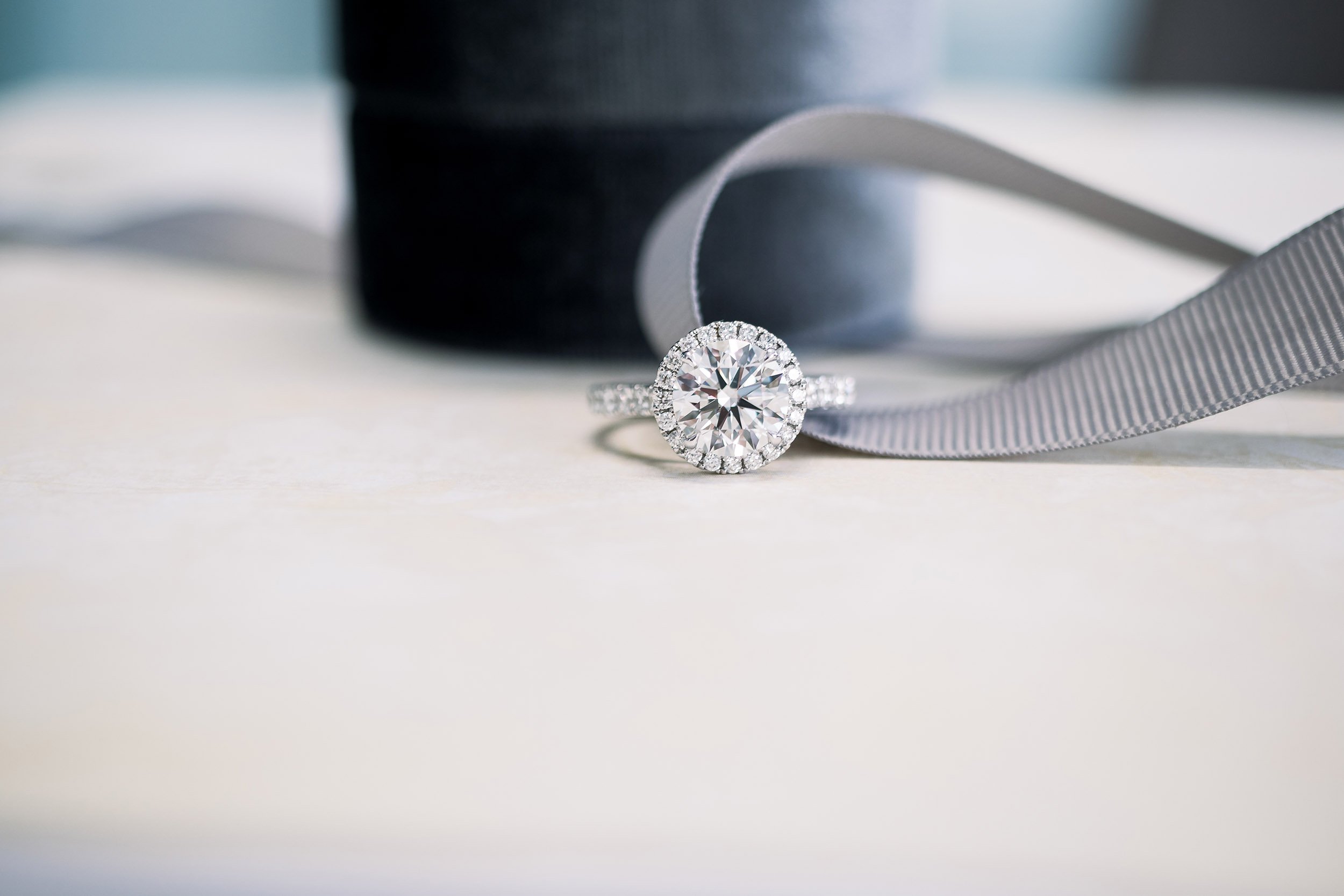
The pave setting makes the band of the ring with smaller diamonds in it. This gives some shine but also increases the number of settings that need proper inspection and cleaning. The suitable type of setting also depends on how often the person uses his hands.
Platinum, White Gold, or Yellow Gold?
The metal influences the ring’s color, weight, maintenance, and long-term appearance.
| Metal | Main advantage | Practical consideration |
|---|---|---|
|
Platinum |
Naturally white and dense | Develops a surface patina with wear |
| 18K white gold | Bright, pale appearance |
May require periodic rhodium replating |
|
18K yellow gold |
Warm color and traditional appeal | Develops scratches through daily use |
| 18K rose gold | Soft pinkish tone |
Copper-rich alloys may be unsuitable for some wearers with metal sensitivities |
In Germany, the jewelry made of precious metals uses the terms like 750 for 18-karat gold and 950 for platinum alloys. Such terms show precious metal content in the piece but not its manufacturing quality.
Band design should also be considered. The ring may seem delicate but may be too thin to set a large diamond in. Ask about the thickness of the band, setting design and possibility to resize the piece in the future.
European Ring Sizes Require Careful Measurement
German ring sizes are measured in millimeters of inner circumference. Thus, a ring with size 54 would have an inner circumference of about 54 millimeters. The method of sizing rings varies from numerical ring sizes used in the US and UK.
Small difference in sizes can greatly affect the wearing experience of a ring. Finger size can vary with temperature, level of activity, and time of the day. Also, wider bands appear more tight than narrow bands with the same inner circumference. For proper measuring, one should use a ring that suits the finger or have the finger sized by a professional.
Surprise proposals pose a different challenge. In case you cannot find out the exact size, then a design which can be resized is recommended instead of a complex diamond-set eternity style band.
The Wedding Band Should Influence the Design
The engagement ring is typically picked out months or years in advance of the wedding band, yet taking both rings into account will help avoid costly modifications. A low profile center diamond could limit the use of a straight wedding band that sits flat on the engagement ring.
This isn’t necessarily a flaw in the design. There are those who like a slight gap, or even those who pick a curved wedding band.
More height in the gallery might afford extra space for the straight band, yet the tradeoff could be a more prominent center stone and increased vulnerability to snagging on clothes.
Hidden halos and accents on the basket must be carefully considered because they could interfere with neighboring rings when there’s not enough clearance.
Before deciding on any design, inquire if it’s possible to use a straight wedding band alongside it, and if the setting is suitable for modifications later on.
Buying a Customized Ring in Germany
There can be various options for customization such as selection of the diamond, alteration of the ring design, choice of the precious metal, and engraving. The good thing about it is that there will be more control on how the final ring looks like. The problem lies in making modifications once the ring is manufactured.
It is important in Germany to know about the return policy due to consumer regulations before ordering an item. There is always the option of the 14-day statutory right of withdrawal when shopping online. However, personalized items are usually exempted.
Before placing an order, request written confirmation of the following:
-
The diamond’s identity, measurements, and grading documentation.
-
The precious-metal alloy and ring dimensions.
-
Whether resizing is possible and what it may cost.
-
The estimated production and delivery schedule.
-
The applicable return, alteration, and repair conditions.
-
Whether the quoted price includes German VAT and any delivery charges.
Engraving should ideally follow confirmation of the ring size, particularly if resizing could affect the inscription.
A Ring Designed for Long-Term Wear
A well-chosen ring has to remain stylish after the wedding proposal, and the selection of the ring is final. The diamonds are very difficult to scratch, however, they may chip if hit from a certain angle. The precious metals also tend to wear off with age, and no matter how good the prongs are, they will give way sooner or later.
Cleaning the ring with proper cleaner on a regular basis would avoid discolorations on the surface of the diamond. Inspection on a regular basis ensures that none of the prongs is loose, or even worse, the entire stone is missing.
Furthermore, it is important to consider how easily any damage can be fixed. The delicate rings with elaborate gallery work or full shank may require additional attention during such procedures.
In addition, the ring that is simple in its design with a secure setting and comfortable shank may be of greater value than an intricate ring that needs to be checked from time to time. Last but not least, the true value of the ring can only be estimated by trying it on and looking at it in a mirror.